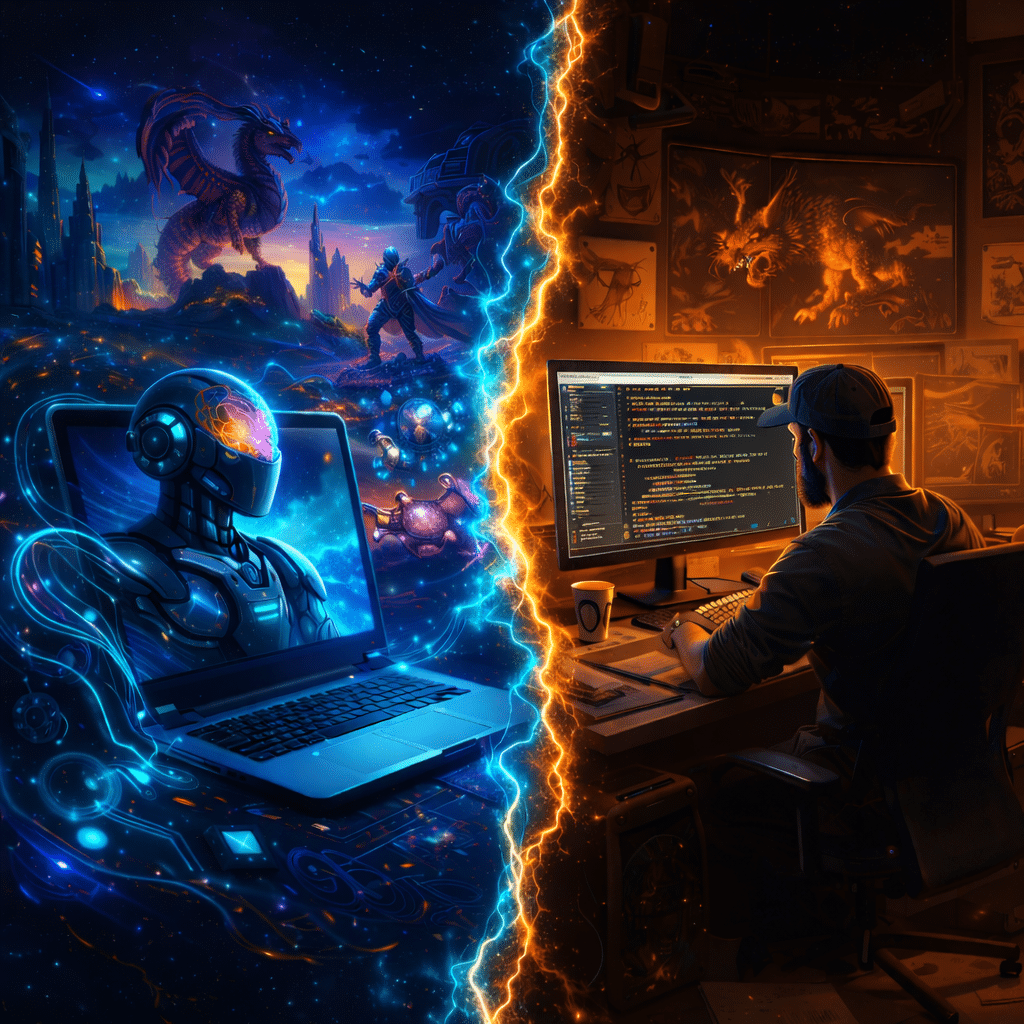
Generative AI has become one of the most discussed topics in tech and entertainment, but in the video game world, developer opinions about it are surprisingly mixed. A recent Game Developers Conference (GDC) industry survey shows that over half of game developers believe generative AI is having a negative impact on the gaming industry, even as many studios adopt it internally for practical tasks.
This divide reveals a deeper tension: developers see value in AI tools, yet they worry about quality, creativity, and long-term consequences. Understanding these perspectives helps explain why generative AI remains both promising and controversial in games.
In this article we’ll explore why developers are skeptical, how AI is actually being used in game development, and what the debate means for creativity, jobs, and player expectations.
Developers’ Skepticism Despite Rising Adoption
While generative AI is increasingly present in game development workflows, many developers feel uneasy about its broader impact.
According to the 2026 GDC State of the Game Industry survey, 52 percent of developers said generative AI is having a negative impact on the video game industry: a marked increase from previous surveys; only about 7 percent viewed its impact as positive.
At the same time, the survey found that only 36 percent of developers reported personally using generative AI tools in their work, even though a larger share say their companies employ such tools. This suggests that while adoption is rising, hands-on usage within dev teams remains limited.
Why the skepticism?
Many developers cite concerns that AI:
● Could lower creative quality or produce generic content rather than thoughtful design.
● May contribute to job insecurity amid ongoing industry layoffs and restructuring.
● Raises ethical questions about copyright, training data, and fair credit for human creators. (While these specific survey details are broader industry concerns, they are consistent with developer discussions about AI ethics and rights issues.)
In some studios, concerns around AI go beyond technical performance and touch on the future identity of game creation itself, with some developers expressing that the technology could threaten the craftsmanship embedded in game art, narrative, and design.
How Generative AI Is Being Used in Development
Despite mixed feelings, generative AI hasn’t stayed on the sidelines. Developers and studios are experimenting with these tools in a variety of practical contexts.
According to industry reports:
● AI is most often used for research and brainstorming, such as generating ideas or text outlines.
● Some developers use it for prototyping and testing, helping create iterations of mechanics or placeholder assets.
● A smaller proportion apply AI to asset generation, including art, layouts, or automated code support.
However, a relatively small fraction of developers apply AI to player-facing features, such as dynamic narrative systems or real-time procedural interactions: a use many associate with next-generation gameplay enhancement rather than backend support.
These uses echo broader enterprise patterns: designers tend to leverage AI for auxiliary support rather than core creative control. Meanwhile, adoption can vary widely by role and studio size, with business and managerial units often using AI more than direct technical or art teams.
Implications for Creativity, Jobs, and Player Expectations
The generative AI divide among developers reflects concerns that span creative, economic, and consumer dimensions.
Creativity Under Debate
For many developers, the concern is not simply about replacing jobs but about preserving the human element of artistry. Critics argue that while AI can generate assets quickly, it may produce formulaic or uninspired outputs that lack the nuance of human-led design.
Some game creators worry that overreliance on AI could lead to an industry where aesthetics and narrative depth are diminished in favor of efficiency. This is particularly sensitive in narrative writing, character design, and world-building — areas traditionally seen as deeply human crafts.
Jobs and Economic Anxiety
Generative AI’s potential to automate tasks like level design suggestions, localization, and testing can reduce the workload on human developers. Yet, this also fuels anxiety about job security. The same GDC survey that captured negative sentiment about AI also highlighted ongoing layoffs across the industry, which may amplify concerns that AI could be used to justify staff reductions.
Indeed, broader tech and entertainment sectors have seen debates about AI replacing creative labor, with similar tensions arising in film, writing, and music communities.
Player Expectations and Market Demand
From the player perspective, AI-enhanced systems could offer richer interactivity, such as more responsive NPCs or emergent story paths, without sacrificing production values. Real-time generative NPC behavior, procedural content, and adaptive gameplay are examples where AI may enhance immersion.
Yet, player sentiment is also cautious; many gamers value authenticity and craftsmanship, and some express preference for developer-authored experiences over AI-generated content, particularly where story and design quality are critical.
What This AI Divide Means for the Industry
The split among developers suggests that generative AI is neither a panacea nor a uniform threat. Instead, it is a tool with uneven adoption and complex implications.
On one hand, AI tools help with routine tasks, lower barriers to experimentation, and can accelerate certain development processes. On the other hand, there are real concerns about preserving quality, maintaining ethical practices in asset creation, and ensuring that human creators remain central to the storytelling and design processes that define the medium.
This tension is being felt across companies of different sizes, from indie studios experimenting with AI prototypes to large publishers integrating AI into asset pipelines. Leadership in some organizations continues to champion AI as necessary for future competitiveness, but not all teams share that view, especially those closest to creative content creation.
As conversations continue at industry gatherings like GDC and in internal studio discussions, the divide represents an opportunity for thoughtful debate about how AI should be governed, credited, and integrated into game development in ways that respect both innovation and artistic integrity.